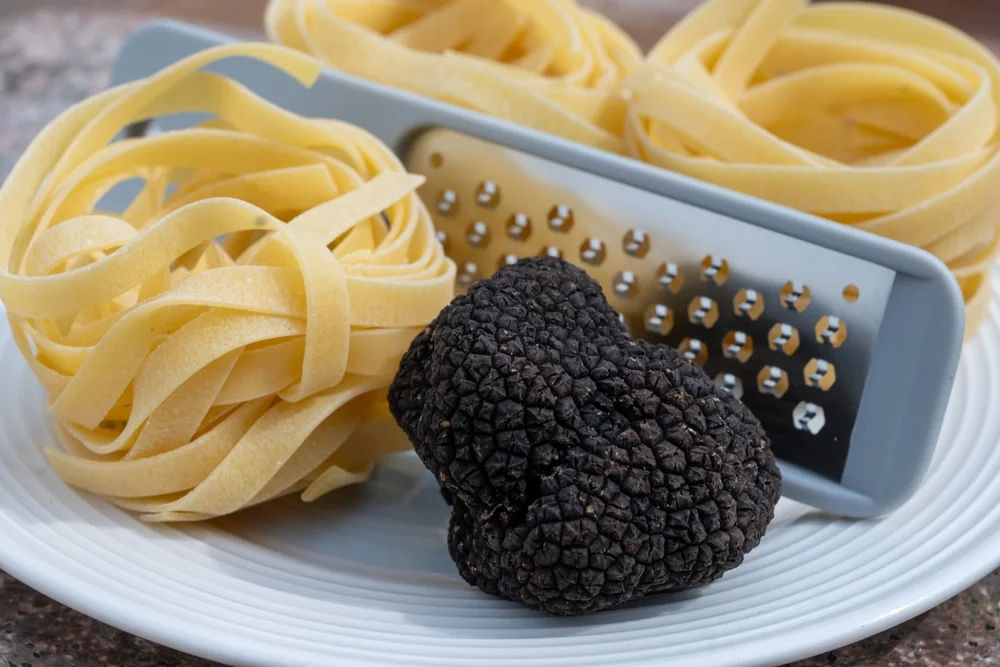
Tuscany is a region that seduces the senses slowly. It’s not just about landscapes that seem painted by hand or medieval towns frozen in time. It’s about flavors that tell stories—ancient, earthy, and deeply connected to the land. Among the most iconic culinary experiences in central Italy, few combinations are as evocative as wine and truffle.
This pairing is more than a gastronomic pleasure. It’s a cultural ritual, rooted in centuries of tradition, shaped by the rhythms of nature, and elevated by the craftsmanship of local producers. From the rolling hills of the Chianti region to the forests surrounding San Miniato, Tuscany offers a unique journey into one of the most refined expressions of Italian cuisine.
Why wine and truffle work so well together
At first glance, pairing wine and truffle might seem complex. Truffles have an intense, unmistakable aroma—earthy, musky, sometimes even garlicky—while wine offers a wide spectrum of flavors depending on grape variety, aging, and terroir. Yet, when matched correctly, they enhance each other in a way that feels almost instinctive.
The key lies in balance. White truffles, delicate yet aromatic, pair beautifully with elegant wines that don’t overpower them. Red wines, especially those with structure and aging, can complement black truffles, whose flavor profile is deeper and more robust.
In Tuscany, this harmony is not theoretical—it’s part of everyday life in many rural areas. Local cuisine has evolved to respect the ingredients, not dominate them. A simple dish like fresh tagliolini with shaved truffle becomes extraordinary when paired with the right glass of wine.
The truffle culture in Tuscany
Truffles are not cultivated in the traditional sense—they are hunted. This makes them rare, seasonal, and highly prized. In Tuscany, truffle hunting is a tradition passed down through generations, often involving trained dogs and deep knowledge of the land.
The most famous area for truffles in Tuscany is San Miniato, a small town located between Florence and Pisa. Here, the prized white truffle (Tuber magnatum pico) is celebrated every autumn with festivals that attract chefs, gourmets, and travelers from all over the world.
Walking through the Tuscan countryside during truffle season is an experience in itself. The forests are quiet, the air crisp, and the anticipation of discovery adds a sense of adventure. It’s not uncommon for visitors to join local hunters for a guided experience, learning how to identify the right terrain and witnessing firsthand the moment a truffle is unearthed.
Tuscany’s wines: a perfect companion
Tuscany is synonymous with wine. The region is home to some of Italy’s most prestigious labels, many of which are internationally recognized for their quality and character.
The backbone of Tuscan wine is the Sangiovese grape. It’s used in iconic wines such as Chianti Classico, Brunello di Montalcino, and Vino Nobile di Montepulciano. Each of these wines offers a different expression of the territory, influenced by soil composition, altitude, and aging techniques.
When paired with truffles, these wines reveal new dimensions. A well-aged Brunello, for example, with its notes of leather, spice, and dried fruit, can elevate a dish with black truffle into something truly memorable. On the other hand, a younger Chianti, with its vibrant acidity, can cleanse the palate and highlight the subtle nuances of a white truffle dish.
White wines also play an important role. Vernaccia di San Gimignano, one of Tuscany’s most historic white wines, offers a fresh and mineral profile that pairs beautifully with lighter truffle preparations.
Traditional dishes that celebrate the pairing
Tuscan cuisine is known for its simplicity. Ingredients are treated with respect, and recipes often rely on a few high-quality elements rather than complex techniques. This philosophy is particularly evident in dishes that feature truffles.
One of the most iconic is tajarin or fresh egg pasta served with butter and shaved truffle. The richness of the pasta and butter creates a perfect base for the aromatic intensity of the truffle, while the wine completes the experience.
Another classic is uovo al tartufo—a soft egg topped with freshly shaved truffle. It’s a dish that captures the essence of Tuscan cooking: minimal, yet deeply satisfying.
Even meat dishes, such as beef fillet or roasted game, are often enhanced with black truffle, especially during the colder months. These dishes are typically paired with full-bodied red wines, creating a combination that is both powerful and refined.