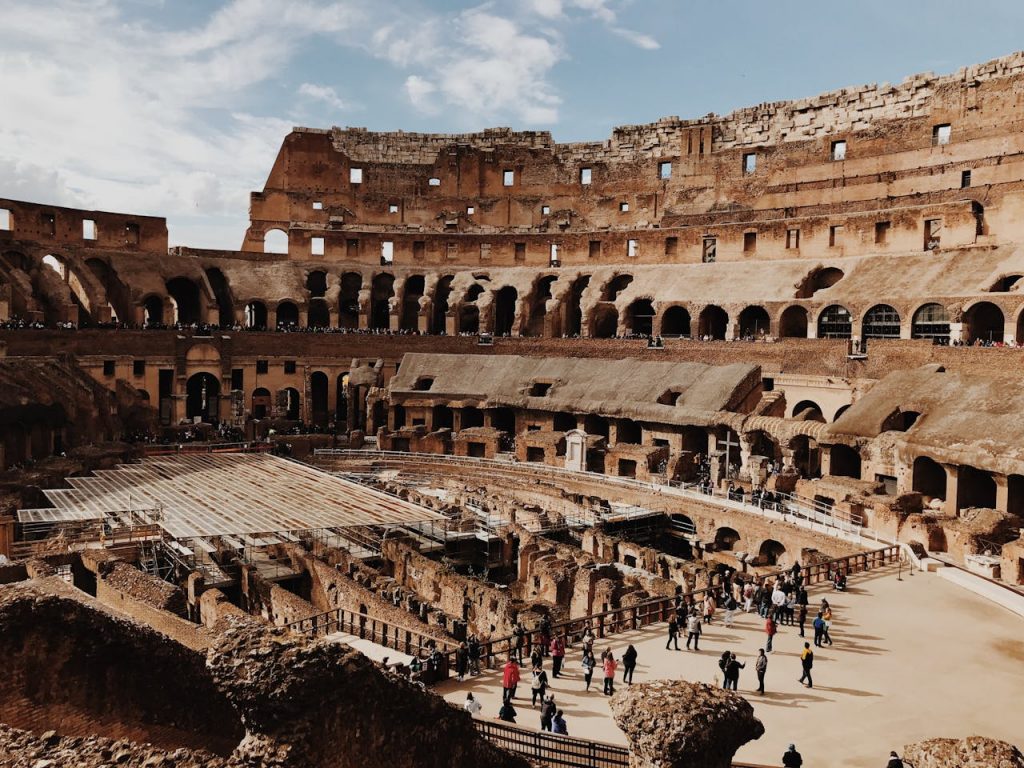
When you think of Ancient Rome, the Colosseum instantly comes to mind. It’s the iconic symbol of the Roman Empire’s grandeur, a monument that has stood the test of time, witnessing centuries of glory, decline, and rebirth. But just a short walk away lies the Palatine Hill, a lesser-known but equally captivating destination that unveils the roots of Rome itself.
In this article, we’ll take you on a journey from the mighty Colosseum to the historic slopes of Palatine Hill, exploring ruins, myths, emperors, and panoramic views — a perfect route for history lovers and curious travelers alike.
Walking Through Time: The Colosseum Experience
The Colosseum, also known as the Flavian Amphitheatre, is one of the most visited landmarks in the world. Built in 70-80 AD under the Flavian emperors, this colossal structure could hold up to 80,000 spectators, making it the largest amphitheater ever constructed in the Roman Empire.
Visitors today can walk through its impressive corridors, stand on the reconstructed arena floor, and imagine the roar of the crowds as gladiators battled for glory. Every stone of the Colosseum tells a story — of entertainment, propaganda, imperial power, and Roman engineering brilliance.
What You Shouldn’t Miss Inside the Colosseum
A proper Colosseum tour wouldn’t be complete without these stops.
- The Arena Floor: A partial reconstruction gives you a gladiator’s perspective of the games.
- The Underground (Hypogeum): These tunnels once held wild animals, prisoners, and stage equipment. Today, guided tours can reveal their secrets.
- The Upper Levels: Not always open to the public, these offer stunning views over the Roman Forum and the city skyline.
Whether you join a guided tour or explore on your own, a visit to the Colosseum is a journey into the heart of ancient spectacle.
The Roman Forum: A Gateway to Power
Between the Colosseum and Palatine Hill lies the Roman Forum, once the beating heart of the Roman Republic and Empire. This area was home to temples, basilicas, triumphal arches, and political meeting places.
Strolling along the Via Sacra (the Sacred Way), you’ll encounter:
- The Temple of Saturn, one of the oldest surviving temples.
- The Arch of Titus, celebrating Rome’s victory over Jerusalem.
- The Curia, where the Roman Senate met.
Today, the Forum is an open-air museum, allowing visitors to wander freely among ruins that once shaped the ancient world.
Palatine Hill: Where Rome Was Born
Standing 40 meters above the Roman Forum, Palatine Hill is not just another archaeological site — it is where Rome’s legendary founding began. According to myth, this is where Romulus killed his brother Remus and established the city in 753 BC.
But beyond myth, Palatine Hill was home to emperors and aristocrats. The ruins here reveal lavish palaces, lush gardens, and ancient corridors that once connected directly to the Forum and Circus Maximus.
Must-See Highlights on Palatine Hill
- Domus Augustana and Domus Flavia: The imperial residences of Emperor Domitian.
- House of Augustus: With original frescoes still intact.
- Farnese Gardens: A 16th-century addition offering quiet paths and beautiful panoramas.
As you walk through the pine-shaded paths, you’ll realize why emperors chose this spot: it offers one of the best panoramic views of Ancient Rome, stretching from the Colosseum to the Vatican.