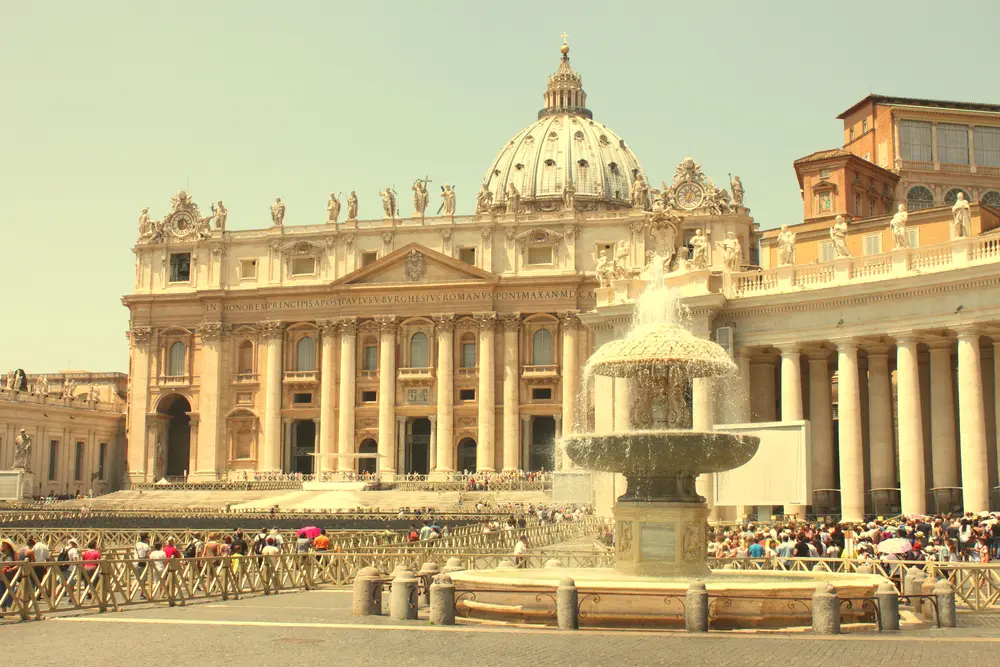
Who can access the Vatican Library?
One of the most common questions is whether the Vatican Library is open to the public. The answer is both simple and nuanced.
Access is not granted to casual visitors. Instead, the library is primarily reserved for:
- Academic researchers
- Historians and scholars
- University professors and specialists
This selective access is not about exclusivity, but preservation. Many of the documents are extremely fragile, and limiting access ensures their survival for future generations.
However, the Vatican has made significant efforts to digitize its collections, allowing a broader audience to explore its treasures online. This digital transformation is slowly opening the doors of the library to the world, without compromising the integrity of the original materials.
The Vatican Library and modern technology
While it may seem like a place frozen in time, the Vatican Library is surprisingly forward-thinking.
In recent years, it has embraced advanced technologies to:
- Digitize manuscripts and rare books
- Preserve delicate materials using innovative conservation methods
- Collaborate with international institutions on research projects
This balance between tradition and innovation is part of what makes the library so fascinating. It is not simply preserving the past—it is actively shaping how that past is studied and understood in the present.
The digitization project, in particular, has been transformative. Scholars who once had to travel to Vatican City can now access high-resolution images of manuscripts from anywhere in the world.
The connection between faith and knowledge
At its core, the Vatican Library represents something deeper than a collection of books. It embodies the relationship between faith and knowledge, a connection that has evolved over centuries.
Throughout history, the Church has played a crucial role in preserving texts that might otherwise have been lost. Monasteries, scriptoria, and later institutions like the Vatican Library became guardians of knowledge during times when access to education was limited.
This dual role—spiritual and intellectual—is still visible today. The library is not only a place for academic research but also a symbol of the Church’s engagement with culture, history, and human inquiry.
Why the Vatican Library still matters today
In an age dominated by digital information and rapid consumption, the Vatican Library offers a powerful reminder of the value of depth, preservation, and continuity.
It stands as:
- A repository of collective human memory
- A bridge between ancient and modern knowledge
- A symbol of cultural and intellectual resilience
Its importance goes beyond religion. Historians, linguists, art historians, and scientists all find valuable resources within its collections.
Moreover, the library challenges a common misconception: that faith and science are inherently opposed. On the contrary, many of the works preserved there show how these two dimensions have often intersected and influenced each other.
Visiting the Vatican: what you can (and cannot) see
Although the Vatican Library itself is not open to general tourism, visiting the surrounding Vatican area still offers a rich cultural experience.
Places like the Vatican Museums and the Sistine Chapel provide a glimpse into the artistic and historical context in which the library exists.
Many exhibitions occasionally showcase selected manuscripts or artifacts, allowing visitors to see fragments of this hidden world.
Understanding the Vatican Library, even without direct access, adds depth to the entire Vatican experience. It transforms a simple visit into a journey through centuries of knowledge, art, and faith.
Vatican Library: a hidden legacy that continues to inspire
The Vatican Library remains one of the most enigmatic and inspiring places in the world. Its quiet halls contain voices from the past—authors, thinkers, and artists whose ideas continue to resonate today.
It is a place where history is not just remembered but actively preserved, studied, and shared.
And perhaps that is its greatest treasure: not the manuscripts themselves, but the continuity of knowledge they represent.
How to visit the Vatican: best tips for first-time visitors
While the Vatican Library itself is reserved for scholars, **exploring the Vatican **with the right perspective can reveal its deeper meaning.
Booking a guided experience allows you to go beyond the surface and truly understand the stories behind places like the Vatican Museums and the Sistine Chapel.
To experience the Vatican in a more insightful and curated way, consider booking a guided tour with Inside Out Italy. Their itineraries are designed to uncover not only the iconic masterpieces but also the hidden layers of history and meaning that make the Vatican one of the most fascinating destinations in the world.