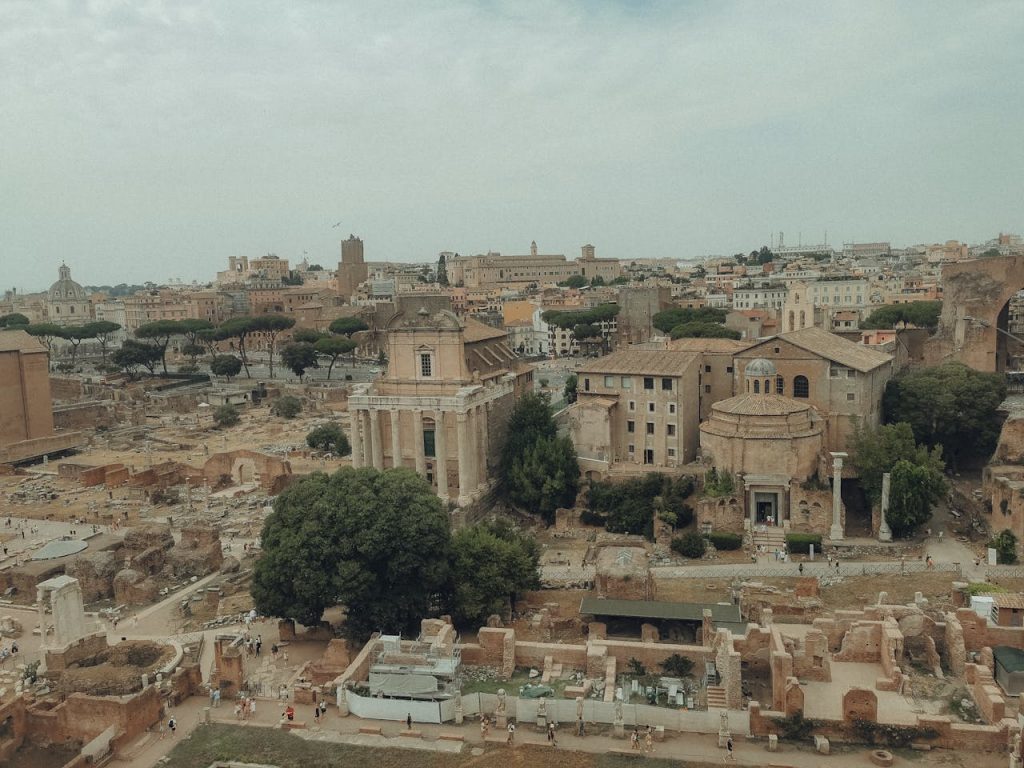
The Roman Forum is more than a collection of crumbling columns and ancient ruins nestled in the heart of Rome—it is a living tapestry of legends, myths, and historical drama. Once the beating heart of the Roman Republic and Empire, this iconic site has witnessed political debates, royal funerals, public executions, and sacred rituals. But beyond the archaeological facts and textbook timelines, the Forum holds a wealth of legends that breathe life into its stones.
Whether you’re planning to walk among its ruins or simply fascinated by the secrets of ancient Rome, here’s a journey through the stories that make the Roman Forum not just a historic monument, but a place of mystery and imagination.
What Was the Roman Forum?
Before diving into its legends, it’s worth understanding what the Roman Forum actually was. Located between the Palatine and Capitoline Hills, the Forum was the center of daily life in ancient Rome. It served as a marketplace, a political hub, a space for religious rituals, and the backdrop of triumphal processions and speeches. Many of the most important Roman buildings once stood here: the Senate House (Curia), the Temple of Saturn, the Rostra, and the Arch of Septimius Severus, just to name a few.
But this physical space, filled with temples, basilicas, and monuments, was also the stage for stories that blended history with legend. Let’s explore them.
Romulus, Remus, and the Birth of Rome
No tale of the Roman Forum can begin without the myth of Romulus and Remus, twin brothers raised by a she-wolf and destined to found a great city. The story goes that after a divine quarrel, Romulus killed his brother Remus and became the sole founder of Rome in 753 BCE.
According to tradition, the Roman Forum was marshy and uninhabitable at the time—but Romulus chose the nearby Palatine Hill to build the first settlement. The Forum would later develop in the valley between the Palatine and Capitoline Hills, becoming the natural meeting place for the growing city.
Some ancient sources even claim that Romulus disappeared during a thunderstorm in the Forum, later deified as the god Quirinus. Whether symbolic or not, this tale places the Forum at the heart of Rome’s divine and violent origins.
The Roman Forum’s Darker Side: The Death of Julius Caesar
One of the most iconic events in Roman history—the assassination of Julius Caesar—is often mistakenly believed to have taken place in the Forum. In truth, Caesar was stabbed in the Curia of Pompey, part of the Theater of Pompey in the Campus Martius. But the Roman Forum is where his body was brought, and his death shook the city to its core.
At the Temple of Caesar, located in the eastern part of the Forum, Romans built a funeral pyre for the dictator. Today, visitors still leave flowers at the site, and many believe the spirit of Caesar continues to haunt the area, especially near the Rostra, where his famous funeral oration was delivered by Mark Antony.
The Sacred Fire and the Vestal Virgins
Among the most revered and mysterious figures in Roman religion were the Vestal Virgins, priestesses of Vesta, goddess of the hearth. Their temple stood prominently in the Forum, close to the House of the Vestals.
Legend held that the sacred fire of Vesta, kept perpetually burning in the temple, was directly linked to the fate of Rome. If it were extinguished, disaster would strike. The punishment for a Vestal who broke her vow of chastity? Buried alive in a secret chamber, often said to lie beneath the Forum itself.
Many ghost stories circulate around this site. Some say they’ve seen veiled figures at twilight, silently walking through the ruins of the Vestal complex. Whether fact or folklore, the aura is undeniable.
The Curse of the Tarpeian Rock
On the Capitoline Hill, overlooking the Forum, is the site of the Tarpeian Rock—a sheer cliff used for public executions. Traitors were hurled to their deaths from this site, cursed forever in Roman memory.
The legend begins with Tarpeia, a Roman maiden who betrayed her city to the Sabines in exchange for gold. But the Sabines, disgusted by her greed, crushed her under their shields and threw her body from the rock. The rock was named after her, and the tale became a powerful Roman warning: betrayal is punished not with gold, but with infamy and death.