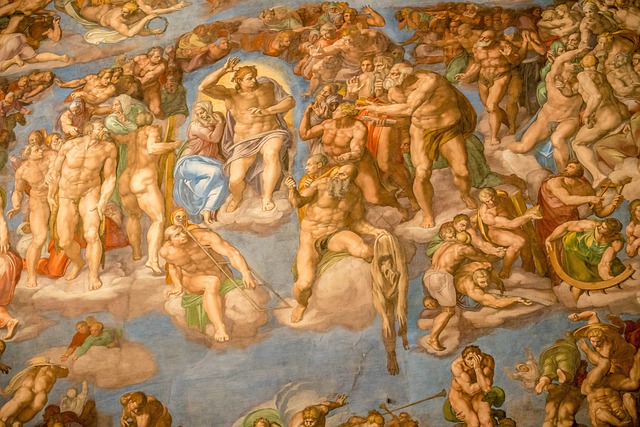
There are places in the world that need no introduction—and the Sistine Chapel is one of them. But beyond its fame, the crowds of tourists, and the countless photos (whether allowed or not) circulating online, lies a world of hidden symbols, secret meanings, and fascinating stories. In this article, we’ll explore the lesser-known wonders of the Vatican’s most famous chapel: from the legendary Creation of Adam to the mystery behind the photo ban—and how to visit it stress-free.
What is so famous about the Sistine Chapel?
When people hear “Sistine Chapel,” the first image that comes to mind is often that of Michelangelo lying on scaffolding, painting the ceiling that would become one of the most iconic masterpieces in history. And indeed, that ceiling is a large part of what makes the Sistine Chapel so famous.
There are two key elements that make the Sistine Chapel a must-see:
- Michelangelo’s ceiling frescoes, painted between 1508 and 1512, featuring nine central panels from the Book of Genesis, including the iconic Creation of Adam.
- The Last Judgment, also by Michelangelo, covering the entire altar wall, painted between 1536 and 1541.
But Michelangelo wasn’t the only artist involved. The walls of the chapel are lined with frescoes by Renaissance masters like Botticelli, Ghirlandaio, Perugino, and Pinturicchio, illustrating episodes from the lives of Moses and Jesus.
The Sistine Chapel is also the sacred site of the Papal Conclave, where cardinals elect a new Pope under absolute secrecy. So it’s not just an artistic treasure—it’s an active symbol of Catholic tradition and history.
Where is Creation of Adam located?
Among the many breathtaking scenes in Michelangelo’s ceiling, the Creation of Adam is undoubtedly the most iconic. The image of God reaching out to touch Adam’s fingertip has transcended time and medium—it’s been printed in textbooks, reinterpreted in films, and parodied endlessly across pop culture.
The Creation of Adam is located roughly in the center of the ceiling, one of the nine narrative panels from Genesis. Specifically, it’s the fourth panel, situated between The Creation of Eve and The Separation of Light from Darkness. As you enter the chapel and look up, you’ll find it almost at the midpoint of the ceiling, standing out for its dynamism and emotional intensity.
What many visitors don’t notice is the philosophical depth of this panel. God is depicted as older yet vigorous, surrounded by angels and cradled in a flowing red drape, which many scholars believe resembles the shape of a human brain—a symbolic gesture that could hint at divine intellect.
Why is it forbidden to take photos in the Sistine Chapel?
Despite the temptation to snap a shot of Michelangelo’s masterpieces, taking photos or videos inside the Sistine Chapel is strictly prohibited—and not just to keep you from spoiling your Instagram feed. Here’s why:
- Preservation of the artwork: Flash photography, even when unintentional, can contribute to the gradual degradation of delicate pigments. Although flash is often banned, enforcing a “no photo” rule altogether eliminates the risk.
- Respect for the sacred space: The Sistine Chapel isn’t just an art museum. It’s a functioning place of worship and an incredibly symbolic space for the Catholic Church. Maintaining a sense of reverence and silence is essential.
- Legal and contractual reasons: When the Sistine Chapel underwent restoration in the 1980s and 1990s, the Vatican signed an exclusive deal with a Japanese TV network that funded the restoration in exchange for image rights. While those rights have since expired, the rule remains.
So while you may be tempted to sneak a selfie with the Creation of Adam, trust us—the experience is far more powerful when fully immersed in the moment, without a screen between you and the ceiling.