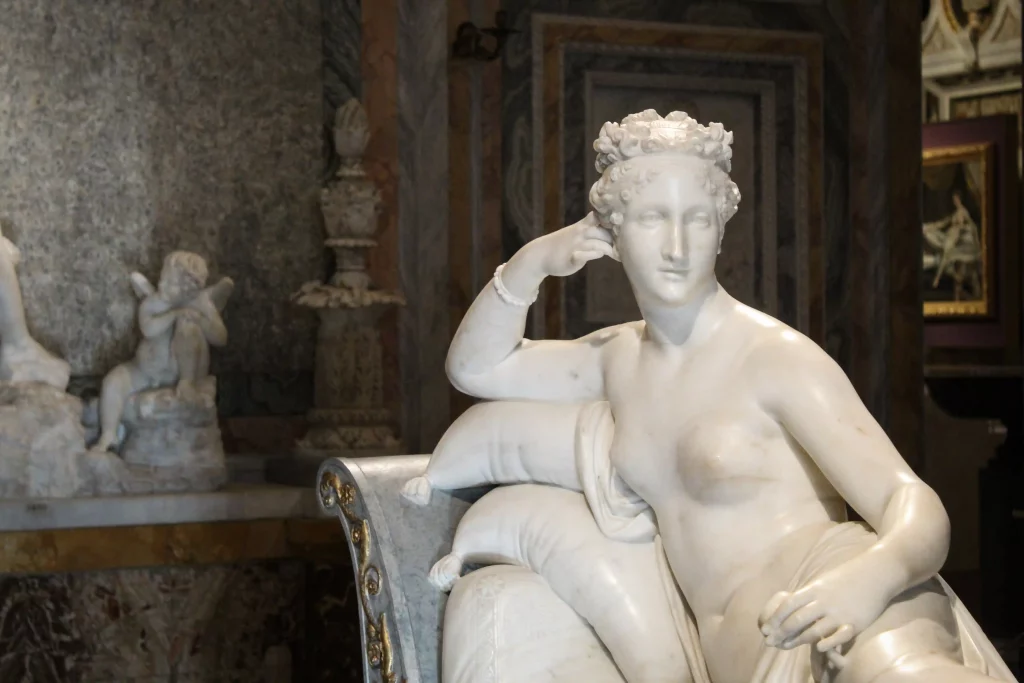
The Role of Borghese Park
One of the most important tourist attractions in Rome is undoubtedly the Borghese Gallery, but its charm is inseparable from the surrounding Borghese Park. This iconic park, covering over 80 hectares, is one of the largest and most historically significant green spaces in the city. Originally designed in the early 17th century as part of the Borghese family estate, the park was created to complement the grandeur of the villa and showcase the family’s wealth and influence.
Over the centuries, Borghese Park has become a symbol of Rome’s dedication to art, nature, and public spaces. Unlike other urban areas in the city, this park provides a peaceful retreat where visitors can enjoy both the beauty of manicured gardens and the serenity of shaded walking paths. Its historical fountains, sculptures, and hidden corners offer a unique glimpse into Rome’s Baroque past, making it an essential stop for anyone exploring the top tourist attractions in Rome.
For travelers, combining a visit to the Borghese Gallery with a walk through Borghese Park enhances the cultural experience. Visitors can stroll among century-old trees, admire sculptures placed throughout the gardens, or even rent a bike to explore the vast area. Families and couples alike enjoy picnics, boat rides in the small park lakes, and quiet moments by ornamental fountains. In addition, the park offers stunning viewpoints where one can see other famous Roman landmarks, creating the perfect blend of nature and cityscape.
Today, Borghese Park is not just a historical estate—it is a living, breathing part of Rome’s urban landscape. Its combination of art, history, and natural beauty ensures that anyone visiting the Borghese Gallery also experiences one of the most picturesque and culturally rich parks in Rome. Booking a skip the line Borghese Gallery ticket allows visitors to maximize their time, enjoying both the artworks inside the gallery and the outdoor treasures of Borghese Park.
Why You Should Skip the Line at the Borghese Gallery
Because the Borghese Gallery limits daily entries to protect the artworks, tickets often sell out days or even weeks in advance. Long lines can discourage even the most enthusiastic visitors, which is why choosing a skip the line Borghese Gallery ticket is highly recommended.
Not only does this option save valuable time, but it also ensures you enjoy the gallery without stress. Whether you’re planning a short trip to Rome or dedicating an entire day to art and history, skip the line access makes the difference between waiting outside and marveling at Caravaggio or Bernini inside.
Experiencing the History of Borghese Gallery Today
Stepping inside the Borghese Gallery feels like traveling back in time. Every painting, sculpture, and architectural detail tells the story of ambition, artistry, and power, and the history of Borghese Gallery is not just about art—it reflects the vision of Cardinal Scipione Borghese and the lasting legacy of a family that shaped Rome’s cultural identity. Today, visitors can walk the same halls that once welcomed cardinals, princes, and artists, exploring the Borghese Gallery timeline from its 17th-century founding to its role as a world-class museum, gaining a deeper appreciation for its place in art history.
Nestled within the heart of Borghese Park, the gallery invites visitors to step into the world of Caravaggio, Bernini, and countless others who left their mark on Rome. To fully enjoy this experience without waiting, securing a skip the line Borghese Gallery ticket is essential, and at Inside Out Italy, we make visiting the gallery truly unforgettable.
Our guided tours, led by expert local guides, bring the art, history, and stories of the Borghese family to life, with options in multiple languages including English, Italian, French, and Spanish, ensuring every visitor can fully appreciate the masterpieces. With our services, you can customize your visit according to your interests—explore Bernini’s stunning sculptures, discover Caravaggio’s dramatic paintings, or focus on architectural details and hidden gems that make the gallery unique.
Inside Out Italy’s tours are not just about seeing the artworks—they are about experiencing them, learning fascinating stories behind each piece, from the vision of Cardinal Borghese to the intricate details of the villa itself. Whether you are an art enthusiast, history lover, or curious traveler, our tours ensure you leave with a deeper connection to Rome’s cultural heritage, making your visit to the Borghese Gallery and the surrounding Borghese Park relaxed, enriching, and truly unforgettable.